Understanding what customers want is the easy half of customer experience work. The harder half — and the one that actually determines whether it shows up in the product — is internal: how the journey is mapped, how it's measured, and whether the employees delivering it are set up to succeed. Taliferro breaks down what that "inside-out" execution actually requires.
Published: 27 May 2023 · Updated: 12 Aug 2026
Co-Founder Taliferro
There's a useful shorthand for customer experience work: outside-in understanding, inside-out execution. Understanding what customers want from the outside is necessary but not sufficient — it's the internal execution that determines whether that understanding ever reaches the customer. Four things separate companies that actually deliver on CX from those that just talk about it: mapping the full journey, measuring more than one metric, aligning departments internally, and treating the employee experience as part of the customer experience.
It's easy to over-invest in the path to purchase and under-invest in everything after it — onboarding, support, renewal. Mapping the full journey end to end, not just the acquisition funnel, is what surfaces where customers actually experience friction. Gartner's research on CX programs found that the ones exceeding expectations spend more attention on post-acquisition experience than on the path to purchase — because that's where loyalty and advocacy actually get built or lost.
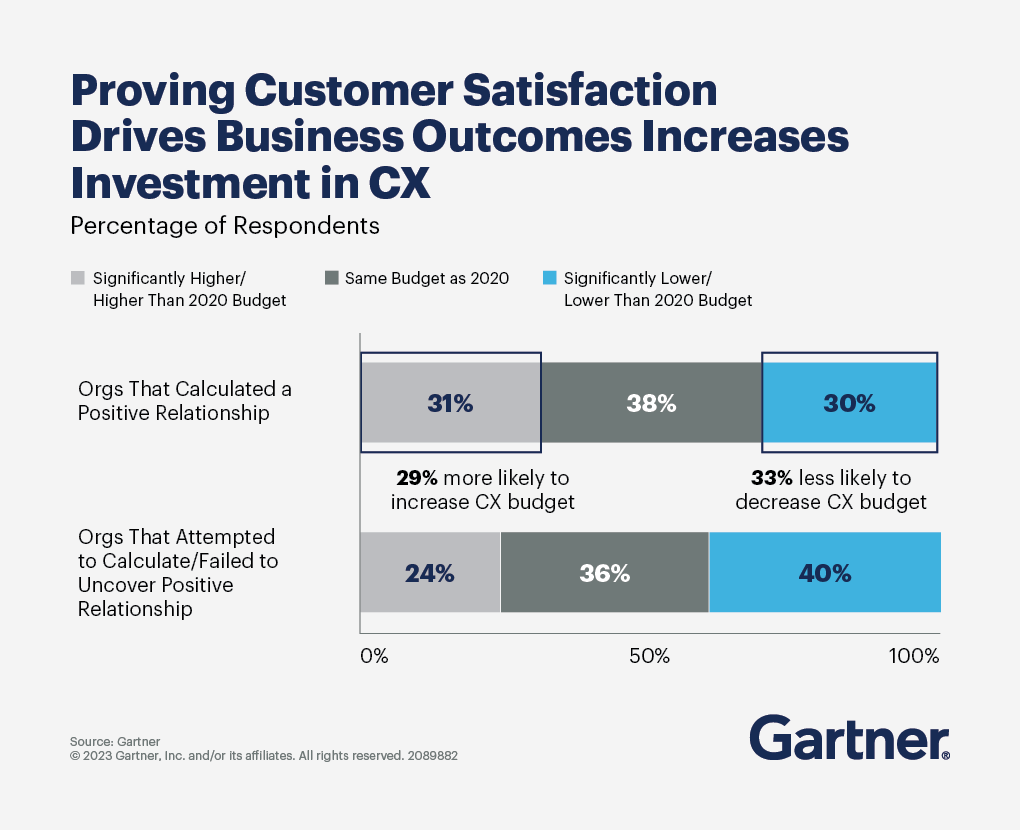
Net Promoter Score alone can't capture what's actually happening across a full customer journey — it's one number standing in for a lot of different experiences. A real measurement strategy tracks a portfolio of metrics tied to specific stages of that journey, the same way a doctor doesn't diagnose a patient's overall health from pulse alone. Without that breadth, a company can watch NPS hold steady while a specific part of the journey is quietly failing.
Consistent customer experience requires departments that agree on what "good" looks like — which doesn't happen by default. Bringing CX leaders from different functions together to align on strategically important customers and their core needs gives the whole organization a shared target, instead of each department optimizing its own piece in isolation.
Customer experience has a backstage: the employees actually delivering it. Friction between departments, how much autonomy employees have to solve a customer's problem on the spot, and whether internal policies help or hinder service delivery all show up eventually in the customer-facing experience. An organization that ignores the employee side of this is trying to fix a symptom while leaving the cause in place.
Outside-in understanding tells you what customers want. Inside-out execution — full journey mapping, real measurement, internal alignment, and an employee experience that supports the customer experience — is what actually determines whether they get it. Companies that treat CX as a marketing initiative instead of an operational one tend to stall exactly at this gap.
Tyrone ShowersStart with system design that removes drag, connect it to the Momentum System, or book a short consult.
Want this fixed on your site?
Tell us your URL and what feels slow. We’ll point to the first thing to fix.
Explore Taliferro's free tools: Ask TODD · Find · Email Signature Builder · SayIt · Lead Vault · Meet Maya — or become an affiliate.
More from the blog