
What changed?
You clicked because something feels harder than it should
If the ad hit a nerve, the page should continue that thought. This section adapts when Microsoft Ads traffic arrives with campaign, keyword, or ad content tracking.
When reports, spreadsheets, and dashboards disagree, your team stops acting and starts guessing.
The problem is rarely the report. The problem is usually the system behind the report.
Taliferro finds where visibility breaks, then gives your team a clear written diagnosis.

If the ad hit a nerve, the page should continue that thought. This section adapts when Microsoft Ads traffic arrives with campaign, keyword, or ad content tracking.
Duplicate records, disconnected systems, unclear ownership, bad reporting logic, and source data nobody trusts.
No long discovery project. No platform pitch. Just a direct diagnosis your team can act on.
When leaders cannot see what is real, every decision takes longer than it should.
The meeting starts. The reports disagree. Finance has one number. Operations has another. The work pauses while everyone argues about what is real.
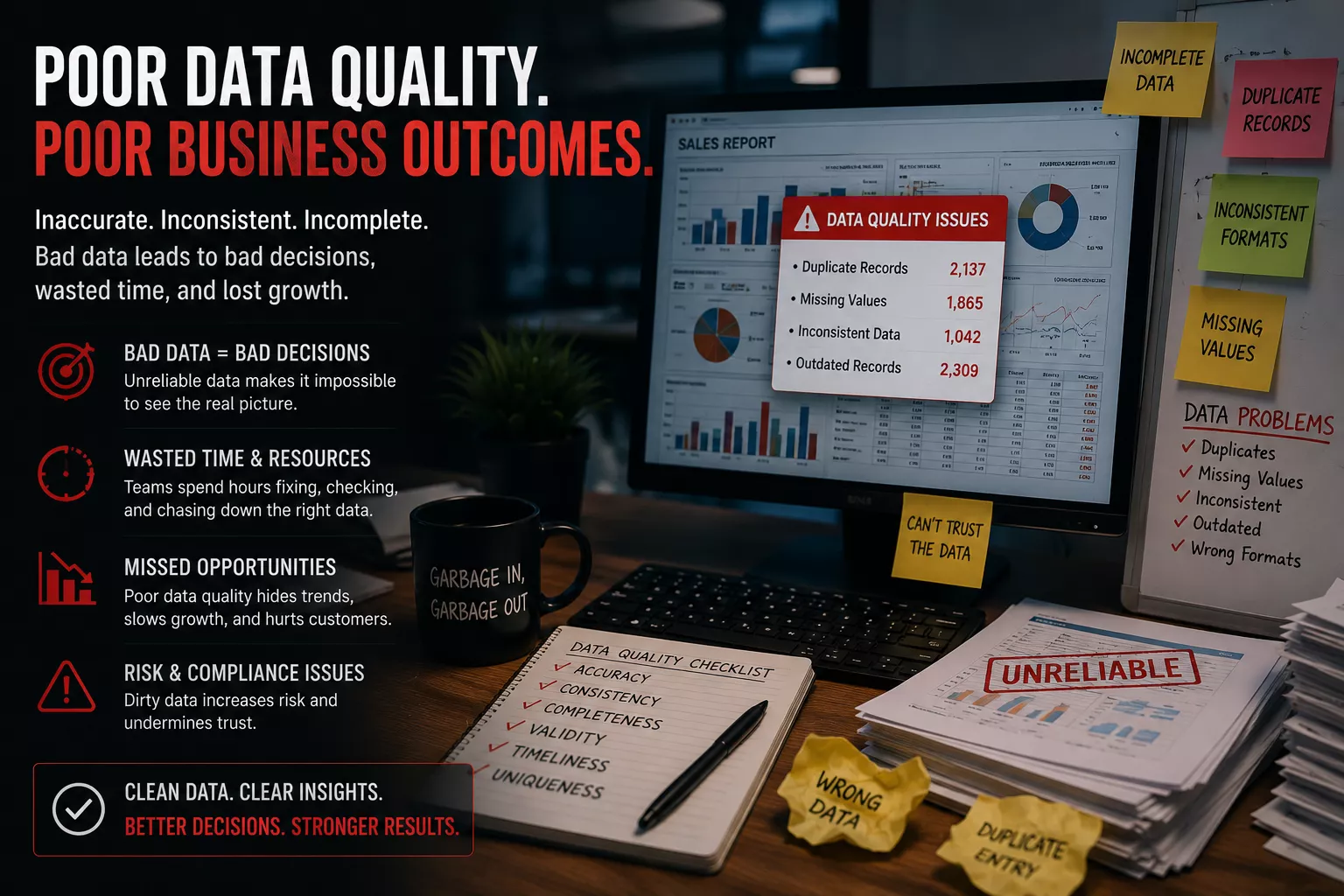
If the systems disagree, the dashboard will disagree too.
When contacts, revenue, accounts, activity, or operations live across disconnected tools, every report inherits the conflict.
When reports contradict each other, the problem is almost always in one of these five places — not in your dashboards.

One focused session. A clear diagnosis. The first moves your team should make next.
You get the root causes, the broken handoffs, and the next moves needed to stop debating the data.
“Taliferro quickly identified issues affecting reporting consistency and operational visibility. Their ability to diagnose the real problem fast saved us considerable time.”
— Lester Blair
Blair Capital Management
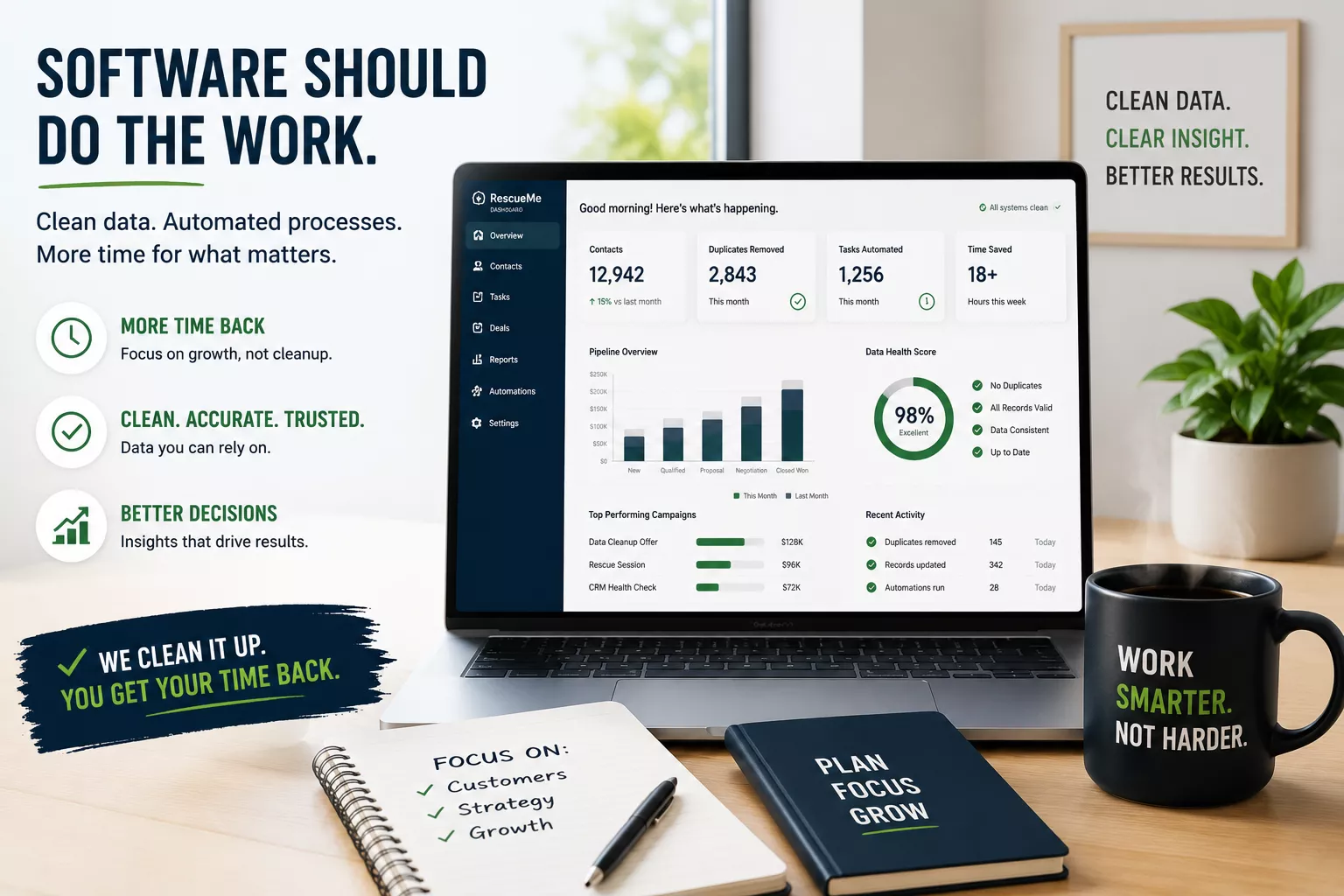
No, you usually do not need to replace every system. No, another dashboard will not fix broken visibility. Yes, a focused diagnosis can show where the problem starts.
Tools don't fix data quality problems — governance and structure do. Most organizations add dashboards, BI platforms, and data pipelines on top of a foundation that was never designed for trustworthy data. The result is more tooling that reports the same bad data faster. The real fix is upstream: source systems, ownership, and validation rules before the data moves anywhere.
If different people pull the same metric and get different numbers, you have a data quality problem. If everyone agrees on the number but the number isn't useful, that's a reporting problem. Both are fixable, but they require different interventions. A good diagnostic starts by identifying which category you're actually in before recommending changes.
A data quality consultant diagnoses where your data breaks, names the root cause, and gives you a clear written action plan. Taliferro's engagement is $999 flat and delivers a written diagnosis in 3 days — specific enough for your team to act on immediately, without a long consulting retainer.
Quick wins — like removing duplicate records, fixing a broken join, or assigning clear data ownership — can show results in days. Structural fixes to source systems take longer, but they're the ones that hold. Most teams see their first measurable improvement in 2–4 weeks once the right problem is clearly named and ownership is assigned.
$999
Book one focused session. Get a written diagnosis in 3 days.
Diagnose the problem in 3 business days. No retainer.
Turn data into predictions and automated decisions.
Design, harden, and integrate APIs that don't break in production.